
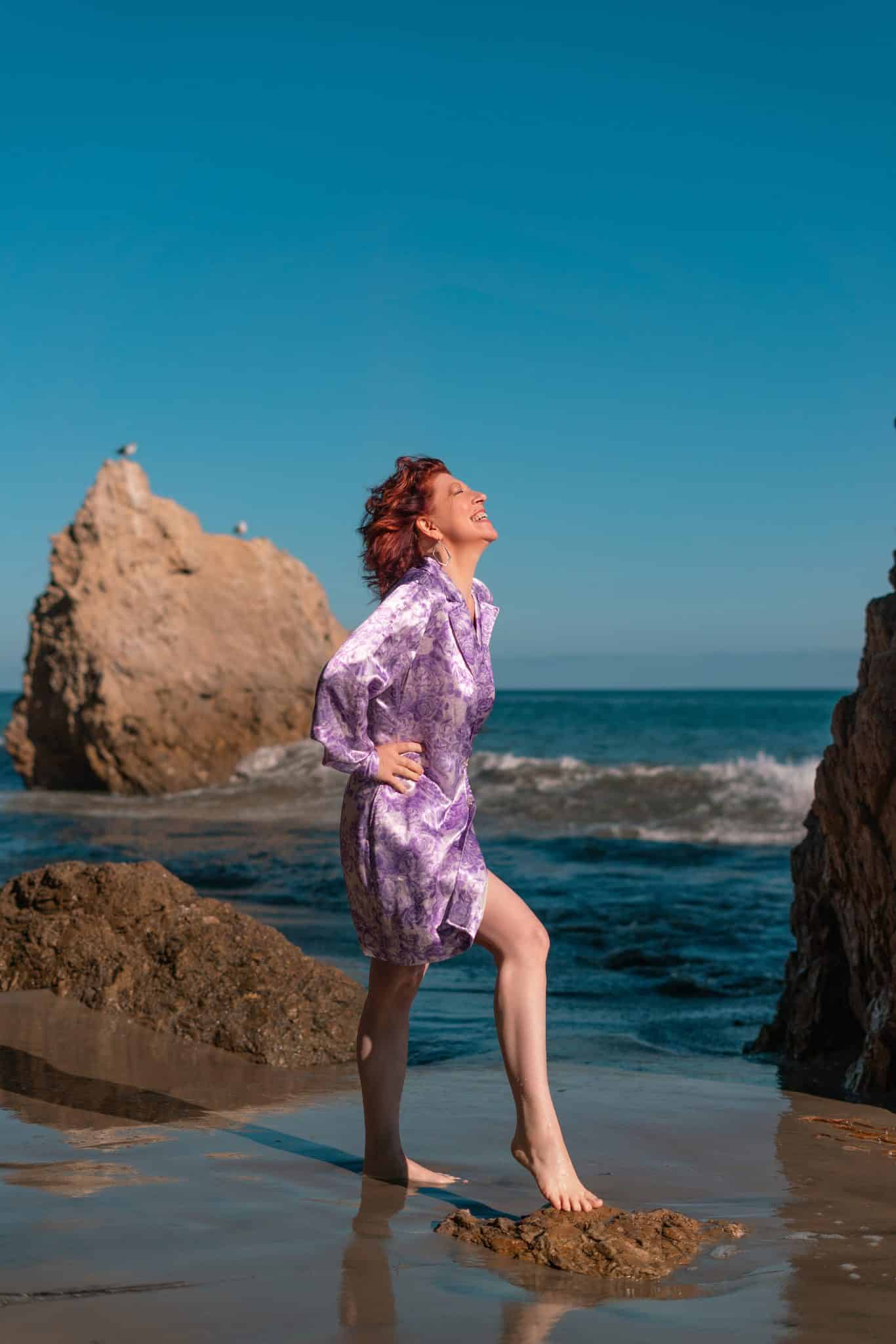
Driving to El Matador Beach is more than a commute; it is a ritual. As an artist, you are often tethered to the studio, your hands covered in paint, your mind occupied with exhibition plans and marketing.
Stepping away isn’t about capturing content or scouting textures. It is about the joy of the road and giving yourself room to breathe.
Key Takeaways
- A solo coastal drive with no camera and no agenda works as a real reset, not wasted time.
- This is the same idea behind Julia Cameron’s “Artist Date” from The Artist’s Way: solo, unstructured time that refills the creative well.
- The cycle that actually works is deep focus in the studio, balanced by real replenishment out in the world.
The Rhythm of the Road
There is a meditative quality to the Pacific Coast Highway. As familiar streets fade, your nervous system begins to recalibrate. The hum of tires and the shift from city to open cliffs act as a reset button. For a few hours, your mind can wander without the pressure to be productive.
Finding Your Flow
When you drive just to drive, you enter a flow state. You are no longer “The Artist” or “The Business Owner,” you are simply a person moving through space. By removing the demand to create, you open the door to new, unexpected insights.
Why Quality Time Matters
Julia Cameron, in her classic creativity book The Artist’s Way, calls this practice an “Artist Date”: solo, unstructured time set aside purely to fill your own creative well. A solo coastal drive is an act of reclaiming your autonomy. In a world demanding constant connection, the car becomes a sanctuary.
Your peace is as important as your professional growth. If the “creative well” is dry, you cannot pour anything into your work. This drive is not wasted time; it is a vital investment in your longevity.
Embracing “Non-Productive” Space
It is tempting to turn every day off into “research.” We feel we should study the light or snap photos for a future painting. I challenge you to leave the sketchbook behind.
Go to the coast empty-handed. Don’t frame the landscape, experience it. Feel the cold fog, smell the salt, and listen to the surf. Without a camera, the memory imprints itself directly onto your soul.
Returning to the Studio
Every trip ends, but you return to Laguna with a renewed mindset. Projects that felt heavy now feel manageable, and creative blocks dissolve in the quiet.
This is the necessary cycle: deep focus in the studio, balanced by replenishment in the world. You need both to truly flourish.

Plan Your Next Escape
Do not overthink your next outing. The goal is simplicity. Grab a coffee, pick a direction, and go.
Treat your car as a mobile sanctuary. Allow yourself permission to drive, to pull over, and to turn off the radio. You are a human who needs beauty and silence to thrive.
\n
If you’d rather find that same reset indoors, an Art4Healing session offers a guided version of the same idea, or see how that restorative practice shows up in the studio itself in Finding My Creative Flow.
Frequently Asked Questions
What is an “Artist Date”?
A term from Julia Cameron’s book The Artist’s Way: solo, unstructured time set aside purely to refill your own creative well, with no productivity goal attached. A solo coastal drive is one version of it.
Why go without a camera or sketchbook?
Because the goal isn’t gathering material for future work, it’s actually resting. Without a lens between you and the experience, the memory settles in more directly instead of becoming another task.
How often should I take an Artist Date?
Often enough that the “creative well” doesn’t run dry. If projects start feeling heavy or blocks won’t dissolve, that’s usually a sign it’s time for one, not a sign to push harder in the studio.
Where can I see the work that comes out of these trips?
Browse the gallery to see finished pieces, or reach out to talk about a commission inspired by this same restorative process.
What’s your favorite escape? I’d love to hear about it, share your own go-to reset spot or ritual.


