Lately, I’ve needed studio silence more than usual. After twenty-plus years as an artist, I know when something new is brewing inside of me, and to actually feel it, I have to sit with the quiet before the paint hits the canvas.

Key Takeaways
- A new large-scale piece just found a home with my third dedicated New York collector, a meaningful milestone for a West Coast studio.
- Fluid acrylic paintings that look effortless on the wall are built on a strict daily studio discipline: without it, the pigments separate, crack, or slide off the canvas overnight.
- Getting a 6-7 foot canvas safely from a Laguna Beach studio to a Manhattan or Brooklyn home takes a real logistics relationship, not a generic freight quote.

Where Do I Start When a New Series Is Brewing?
During this quiet stretch, I picked up Rick Rubin’s The Creative Act: A Way of Being. He writes beautifully about structure and release, and reading it forced me to ask myself a hard question: what’s actually holding me back from painting?
The honest answer is fear, self-doubt, and having too much unstructured freedom. I used to think I needed a massive, pristine gallery space to create in. It’s easy in the art world to get caught up wanting more room, more polish, more everything before you let yourself begin. But I already have what I need right here in Laguna Beach: a space that’s intimate, clean, intentional, and completely mine.
I’ve built a daily ritual to shift my mindset. I open the garage door wide, let the California light flood the floor, and crack the one small window so the coastal air moves through. Opening the space physically helps me open up mentally, clearing the static and putting the focus back on the pure joy of creating.
“Create an environment where you’re free to express what you’re afraid to express.” — Rick Rubin, The Creative Act: A Way of Being
My rule on the hard days is simple: get into the studio anyway, no excuses, and allow myself space to mess up at the start. Some days the creative energy flows perfectly. Other days the giant blank canvas feels daunting, and I choose discipline over my mood, prepping surfaces and mixing pigment even when I don’t feel like it. Discipline works like the stone banks of a river: freedom is the water rushing through, and without those banks the creativity just floods, stalls, and evaporates.

Why Does Abstract Art Resonate With New York Collectors?
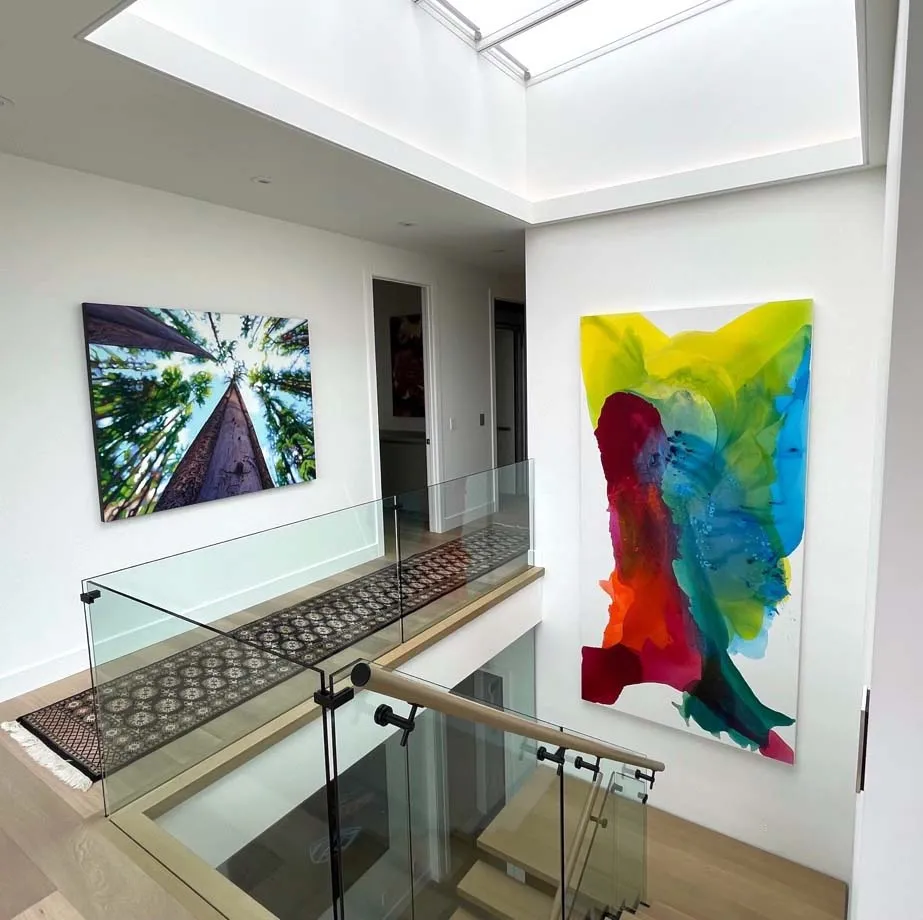
I’m honored to share that another large-scale piece has found a permanent home with a new collector in New York, my third dedicated New York collector to date. For a West Coast studio, building that kind of loyal pocket of support across the Manhattan and Brooklyn art scenes is a real milestone, and it’s made me think about why this work resonates there specifically.
New York is a city built on structure: rigid gridlines, soaring architecture, concrete, and a relentless pace. Every environment that is disciplined needs a counterweight. When a fluid acrylic piece enters a Manhattan high-rise or a Soho loft, it brings in something the rigid lines outside can’t: movement, water, and emotional breathing room. In a real sense, my New York collectors are buying the same creative freedom my daily studio discipline lets me capture in a small, light-filled garage.
What Makes Large-Scale Fluid Painting So High-Stakes?
Discipline matters so much because of the physical and chemical reality of working with fluid acrylics at scale. This isn’t a process where you dump paint and tilt a canvas and hope. When you’re manipulating a canvas six or seven feet across, a single error can ruin thousands of dollars in materials in seconds.
- The Chemistry of the Flow: Pigments differ in density and how they behave in the pour. Titanium white is heavy, phthalo blue is light. Get the ratios of the pouring medium wrong and colors swallow each other, turn to mud, or crack as they dry.
- The Physics of Leveling: Level-testing the work tables is a daily habit. If a surface is off by even a fraction of an inch, the whole painting can slide off the canvas overnight.
The freedom happens in the raw, breathless moment of the pour, when I let go and let the colors collide. That freedom only exists because the structural engineering beforehand was flawless.
How Does a Large-Scale Painting Actually Get to New York?
Once a painting is dry and fully cured, the discipline shifts from chemistry to logistics. Moving oversized original art across the country takes a trusted, specialized team, not a generic shipping quote, since the work is both physically massive and genuinely valuable to the people buying it.
My delivery partner Mario runs a specialized truck from the West Coast to the East Coast every month. He and his team come directly into the studio, wrap large canvases in heavy protective blankets, and secure them for the cross-country trip. Knowing the artwork is in careful hands takes real weight off my shoulders, and it means the bridge between my Laguna Beach studio and a New York home is solid before the piece ever leaves the wall.
Frequently Asked Questions
Do you ship large-scale original paintings to New York?
Yes. I work with a trusted specialized delivery team that makes the West Coast to East Coast run monthly, with in-studio wrapping and protective handling built specifically for oversized canvases.
How many collectors do you currently have in New York?
This latest piece brings the total to three dedicated New York collectors, a growing bicoastal connection I’m genuinely grateful for.
Can I commission a piece specifically for a New York or bicoastal space?
Yes. If you’re a designer or collector working on a Manhattan, Brooklyn, or bicoastal interior, reach out here to talk through a commission.
Why does fluid abstract art work well in a New York apartment or loft?
New York interiors tend to be built on strong structural lines, grids, and hard surfaces. A fluid, organic piece acts as a counterweight, bringing movement and softness into a space that’s otherwise very architectural.
A Note of Gratitude
Finding this bicoastal momentum has been a real turning point. I’m deeply grateful to my growing circle of New York collectors, thoughtful, generous people whose belief in this work helps fuel the discipline it takes to keep showing up in the studio every day.
Are you a bicoastal interior designer or private collector? Let’s anchor your space with a powerful, organic statement piece. View the current collection or reach out to discuss a commission for your New York or bicoastal interior.