A special kind of quiet follows a deep meditation practice. The mental chatter slows down. Your shoulders drop. The urge to rush through life simply evaporates.
An artist’s studio often feels chaotic. It is filled with competing ideas, half-formed plans, and constant pressure. We constantly ask ourselves: “What am I making next?”
Today feels completely different. I am free of stress and grounded. Fresh off the meditation cushion, I approach the canvas with complete clarity. Combining meditation and abstract art has transformed my process. The blank canvas is no longer intimidating. It is an invitation.
Key Takeaways
- A short meditation before painting changes how I approach the canvas: I stop fighting the materials and start listening to the paint.
- Artists prepare their canvases, brushes, and paints, but rarely their mental space. Painting while stressed makes the hand rigid, and rigidity works against fluid abstract art.
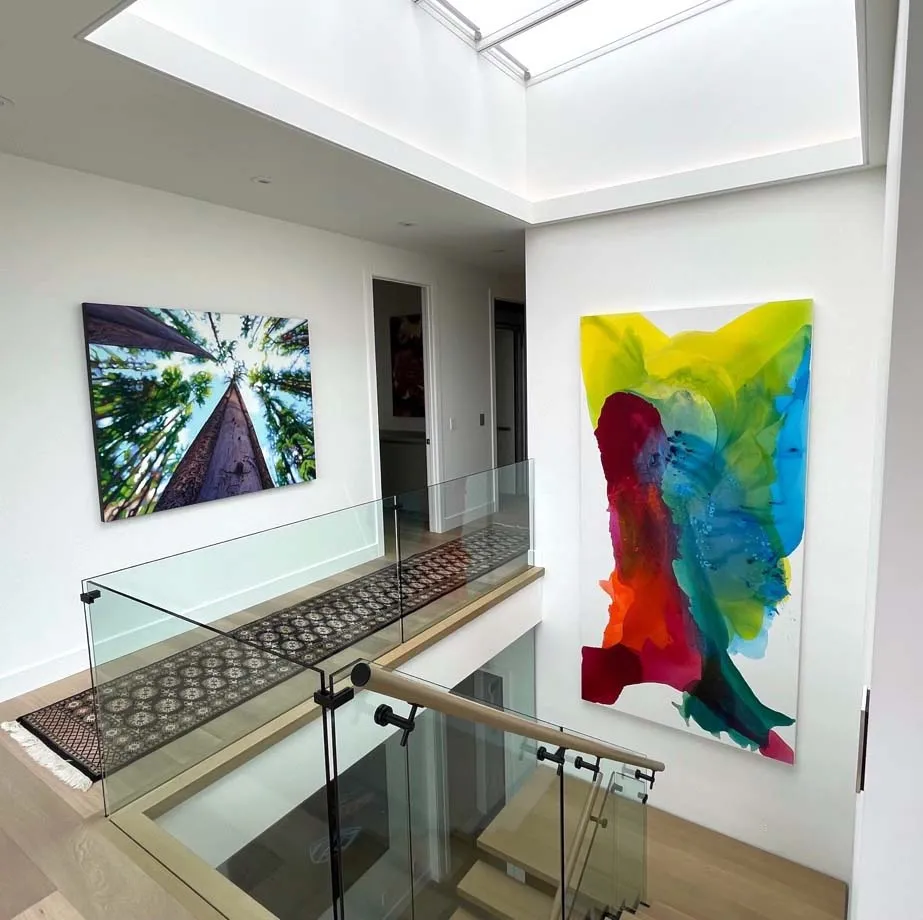
- My 48×80 painting Dream of Water came from that stillness: the translucent teal, aqua, and deep blue layers were allowed to flow rather than be controlled.
The Origin of the Calm: Honoring Ekam and The Oneness Movement
This deep stillness did not happen by accident. My practice today was guided by Ekam / The Oneness Movement.
This global movement was founded by Sri Preethaji and Sri Krishnaji.
Ekam focuses on shifting human consciousness. It moves us out of “suffering states” like anxiety and overwhelm. It guides us into “beautiful states” of peace and connection.
A short meditation practice dissolves internal friction. It changes your entire energy before you paint. You no longer create art to escape anxiety. You paint to express your peace.
Preparing the Mental Studio: Why Artists Need Mindful Practices
Artists spend a lot of time on physical preparation.
- We stretch and sand our canvases.
- We lay out palette knives, brushes, and mediums.
- We carefully mix our paints to the right thickness.
However, we rarely prepare our mental space.
Painting while stressed is a mistake. It is like trying to reflect a calm lake during a storm. Your brushstrokes become tense and forced. You start to micromanage the paint. Stress creates a rigid hand, and rigidity destroys fluid abstract art.
Combining meditation with art resets the creative mind:
- It Silences the Inner Critic: Meditation stops the analytical mind before it can doubt your work.
- It Builds Process Patience: You learn to sit comfortably with the awkward, unfinished stages of a painting.
- It Clears Mental Clutter: You clear away to-do lists and digital noise, making room for pure intuition.

Translating Stillness to the Canvas: Dream of Water (48×80)
A quiet mind changes how paint behaves on canvas. When you start from peace, you stop fighting the materials. You drop the rigid plans and start listening to the paint.
My large-scale piece, Dream of Water (48×80), shows this dynamic in action. It is physical proof of what happens when meditation and abstract art meet.
This 48×80 canvas required complete surrender. The translucent layers of teal, aqua, and deep blue were not forced. The paint was allowed to flow like water: light, fluid, and free.
If I had painted this while stressed, I would have tried to control every drop. I would have overworked the washes and ruined the light. Meditation gave me the trust to step back. The stillness on the inside became the fluid motion on the outside.
The Studio Rule: Turn internal stillness into external freedom. Never force what wants to flow naturally.
A Simple Pre-Studio Meditation Ritual
Try this simple routine before your next painting session:
- Step 1: Disconnect. Turn off all screens 15 minutes before painting. Rest your eyes and nervous system.
- Step 2: Center Yourself. Meditate for 10 to 15 minutes. Use a guided practice from The Oneness Movement or focus on your breath.
- Step 3: Enter Silently. Stand in front of your blank canvas for one full minute. Take a deep breath and ground your feet.
- Step 4: Paint Freely. Make your first marks without worrying about the final result. Let your peaceful state guide your hands.
Art as a Reflection of Inner State
Abstract art mirrors the artist’s inner world. Every stroke and color choice carries the energy of the moment it was born.
Prioritize peace over immediate output. When you do, the canvas stops feeling like a test to be passed. It becomes a sanctuary where clarity and beauty emerge naturally.
The studio is quiet. The paint is moving. It is time to let the canvas tell its story.
Frequently Asked Questions
Why meditate before painting?
Meditation stops the analytical mind before it can doubt your work, builds patience with the unfinished stages of a painting, and clears mental clutter so intuition has room to lead.
What is a simple pre-studio meditation routine?
Turn off screens 15 minutes before painting, meditate for 10 to 15 minutes (a guided practice or your breath), stand silently in front of the blank canvas for one minute, then make your first marks without worrying about the result.
How did meditation shape the painting Dream of Water?
Dream of Water is a 48×80 canvas painted from stillness. The translucent teal, aqua, and deep blue layers were allowed to flow instead of being controlled, so the calm on the inside became fluid motion on the canvas.
Can I commission a large-scale painting?
Yes. Reach out here to talk through a commission.