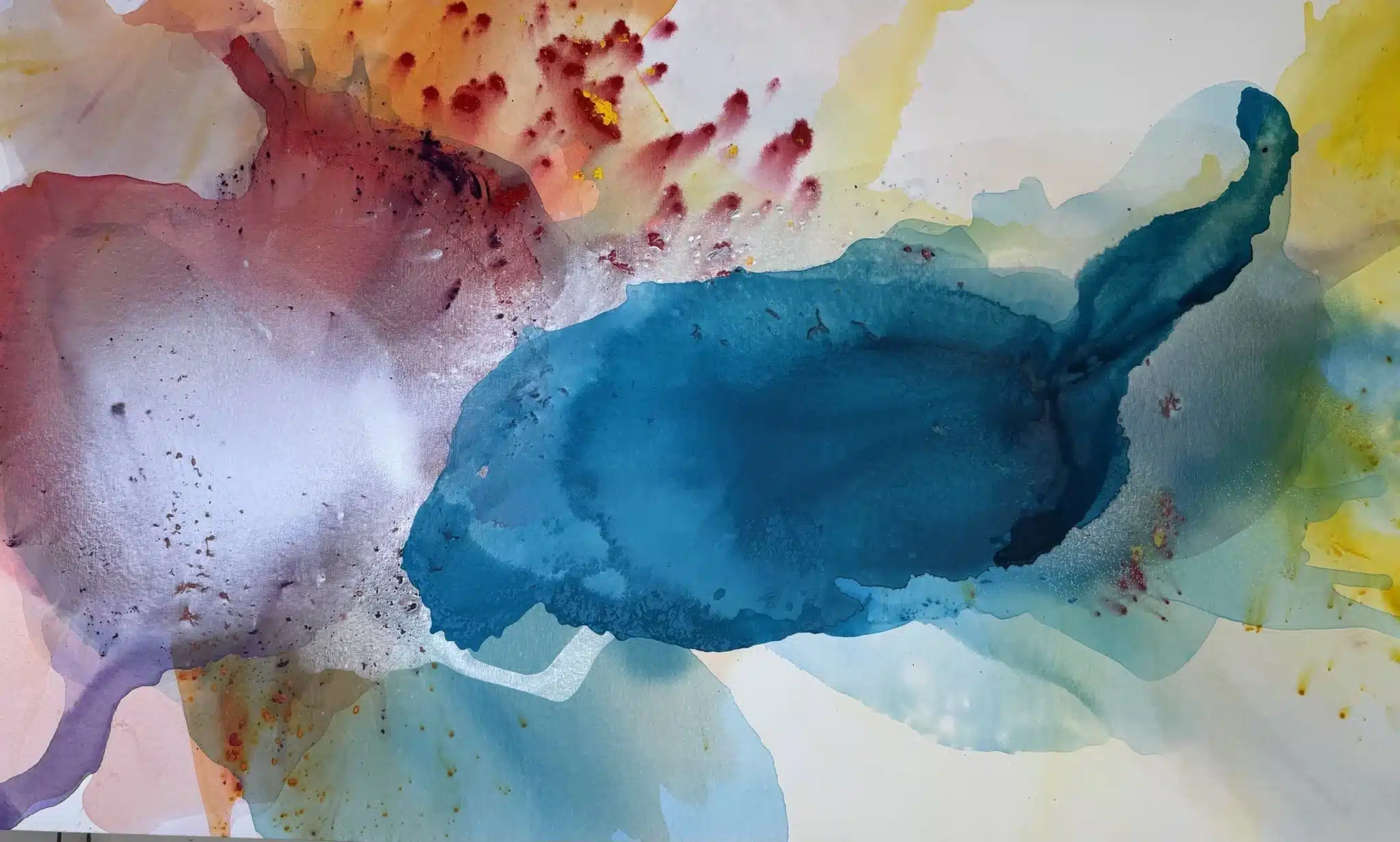
In 2025, 67% of surveyed high-net-worth collectors purchased a painting — more than any other art category — according to the Art Basel & UBS Survey of Global Collecting 2025, based on responses from 3,100 collectors across ten countries (Art Basel & UBS Survey of Global Collecting 2025). Your clients are part of that trend, and they’re increasingly asking for something no catalog can supply: a piece sized, colored, and conceived for their specific room.
Most artist commission pages are written for individual collectors, not for design professionals managing a client relationship, a timeline, and a budget line. This guide fills that gap. It’s a procedural walkthrough for interior designers who need to brief a client accurately, not just admire a portfolio. That means pricing logic, realistic timelines, what to send an artist before your first call, and how commission billing actually interacts with trade discounts. If your project is specifically a hospitality or hotel lobby brief, our companion guide covers sizing and budget frameworks for that setting: How to Choose Large-Scale Abstract Art for a Hotel Lobby.
Key Takeaways
- 67% of collectors bought a painting in 2025, the single most popular art category (Art Basel & UBS Survey of Global Collecting 2025).
- Commission timelines for large-scale original work typically run 6–10 weeks; across four working artists we reviewed, the full range was 3–14 weeks depending on size and complexity.
- Price-per-square-inch runs lower, not higher, for large-scale commissions than for small pieces — a counterintuitive detail worth knowing before you set a client’s budget expectations.
View commission-ready large-scale originals for inspiration before your next client brief.
Why More Designers Are Commissioning Instead of Buying Off-the-Shelf
The broader collecting market is shifting toward original, one-of-a-kind work. Prints and multiples made up just 12% of dealer art sales by value in 2025, while 67% of surveyed collectors specifically purchased a painting that year (Art Basel & UBS Survey of Global Collecting 2025). At the same time, buyers are getting choosier. Artsy’s 2025 survey of 1,600+ collectors and galleries across 60+ countries found 30% of collectors describing themselves as more selective with purchases (Artsy, “Art Market Trends 2025”). Only 17% said the current market “serves them well.” It’s a market where buyers want fewer, more considered pieces rather than more of the same.
A commission answers that selectivity directly: it’s inherently a one-of-a-kind purchase, sized and colored for a specific room, which is difficult to replicate with off-the-shelf inventory no matter how large the catalog.
What clients ask for most often: by far the most common commission brief we receive from designers isn’t “match this swatch” — it’s “we have a 9-foot wall and nothing in our portfolio is right for it.” Scale, not color, is usually the real gap a commission fills.

How Does Commission Pricing Actually Work?
This is the part most commission pages get wrong for a trade audience: they publish a single starting price and stop there. Pricing for large-scale original work is closer to a sliding scale than a flat rate, and the direction of that scale surprises most first-time commissioners.
One frequently-cited gallery-owner pricing framework puts small pieces at $5.00–$7.90 per square inch and large-scale commissions closer to $2.00–$3.40 per square inch (RedDotBlog, “Ask a Gallery Owner: Pricing,” 2024). It’s a single practitioner source, not an industry-wide survey — treat the exact dollar figures as directional rather than a market standard. The underlying logic holds broadly across working artists, though: a large-scale piece tends to cost less per square inch than a small one. Labor, material, and studio overhead don’t scale linearly with canvas size.
Price per square inch declines as commission size increases. Source: RedDotBlog, 2024.
| Size Tier | Price per Square Inch |
|---|---|
| Small | $7.90 |
| Small-mid | $5.00 |
| Mid-large | $3.40 |
| Large-scale | $2.00 |
One important billing distinction: the standard 15–20% “to the trade” discount common for ready-made, off-the-shelf art typically does not apply to commissioned original work (RedDotBlog, 2025). Melanie Biehle’s trade program page confirms the pattern directly — 15% off ready-made pieces, but commissions priced separately. Set that expectation with your client before you present a commission budget. A trade markup on top of a commission price is a different conversation than a trade discount on inventory.
See pricing examples on available large-scale work.
How Long Does a Custom Commission Actually Take?
Timelines vary more than most designers expect. Across four working artists offering large-scale commissions, published timelines ranged from 3 to 14 weeks, with most work clustering around 5–8 weeks for mid-size pieces.
Commission timelines by artist, in weeks. Longer timelines generally reflect larger scale and higher price tiers.
| Artist | Timeline |
|---|---|
| Vicky Reddish | 3–6 weeks |
| Shilo Ratner | 5–6 weeks |
| Melanie Biehle | up to 8 weeks |
| Ritu Raj | 8–14 weeks |
The pattern: shorter timelines correlate with smaller size caps and lower price floors, while longer timelines (8–14 weeks) tend to come from artists working at higher price points with more complex, larger-format pieces. Build client expectations around the upper end of the relevant range, not the fastest quoted timeline — drying time, framing, and shipping logistics routinely add 1–2 weeks beyond the painting itself.

What to Send an Artist Before the First Call
The single biggest predictor of a smooth commission is how much context the artist has before painting starts. At minimum, send:
- Room photos from the primary viewing angle, including any furniture or fixtures staying in place
- Wall dimensions, including ceiling height and any obstructions (outlets, sconces, trim)
- Fabric or material swatches for any element you want the palette to reference — physical samples photograph more accurately in natural light than digital swatches
- A Certificate of Materials (COM) note, if your client has specific archival or lightfastness requirements, especially for pieces near direct sunlight
- A firm installation date, worked backward from the artist’s quoted timeline plus shipping and framing buffer
Artists who request a genuine color and scale consultation — not just a budget number and a floor plan — consistently produce work that needs fewer revision rounds. If a commission page doesn’t mention a consultation step, ask for one directly before you commit a client’s budget.
2025 global art market composition by sales channel. Source: Art Basel & UBS, 2026.
| Sales Channel | 2025 Total | Share of Global Market |
|---|---|---|
| Dealer sales | $34.8B | 58% |
| Public auction | $20.7B | 35% |
| Global total | $59.6B | 100% |
Is a Custom Commission Right for Every Project?
Not always. As of 2025, 40% of all purchases on the marketplace Artsy were for small artworks under 15.75×15.75 inches (Artsy, “Art Market Trends 2025”) — a reminder that the broader market still buys a lot of modest, ready-made work, and a full custom commission isn’t the right tool for every brief.
A commission makes sense when:
- The wall dimensions don’t match anything in an artist’s existing inventory
- The client wants the piece to reference a specific architectural or fabric detail
- Timeline allows 6+ weeks before installation
An existing piece makes more sense when:
- Timeline is under 4 weeks
- The client wants to see and approve the final work before purchase
- Budget favors a fixed, known price over a custom scope
Interestingly, no major industry body currently publishes dedicated data on how designers source or commission art for clients — ASID’s 2025 State of Interior Design Report, for example, covers broader design trends but contains no published figures specifically on art procurement or commissioning behavior (ASID, “2025 State of Interior Design Report”). That’s a genuine gap in the trade data, which is part of why so much of this guide draws on direct, published artist pricing and process rather than a single industry survey.

Read more: The Process of Creating a Commissioned Art Work.
What a Well-Run Commission Looks Like When It’s Finished
If the process went well, three things should be true. The piece arrived within the agreed timeline, plus a reasonable shipping and framing buffer. The color palette reads as intentional against the room, not matched too literally. And the client was consulted at least once during the process, rather than surprised by the final result.
The next-level move for a design firm that commissions regularly is establishing an ongoing relationship with one or two artists whose process you trust — repeat collaborations shorten the consultation phase considerably, since the artist already understands your firm’s typical client profile and palette preferences.
Frequently Asked Questions
How much does a custom large-scale painting commission cost?
Pricing typically runs on a sliding per-square-inch scale, with large-scale work priced lower per square inch than small pieces — roughly $2.00–$3.40/sq in for large-scale commissions versus $5.00–$7.90/sq in for small work (RedDotBlog, 2024). Get a specific quote based on your exact dimensions rather than budgeting off a generic per-piece minimum.
Do trade discounts apply to commissioned art?
Usually not in the same way they apply to ready-made inventory. The standard 15–20% to-the-trade discount is typically reserved for existing, off-the-shelf pieces; commissioned work is priced and negotiated separately, directly between the artist and the design firm.
How far in advance should I commission art for a project?
Build in 6–10 weeks minimum for the painting itself, plus additional time for framing and shipping. For larger or more complex pieces, some artists quote up to 14 weeks — always confirm the artist’s current timeline rather than assuming a standard turnaround.
What if my client wants to see the piece before it’s finished?
Ask upfront whether the artist offers progress updates or a mid-process studio visit. Many working artists build this into their commission process specifically because it reduces revision requests at the end.
Can I commission art sight-unseen for a client who trusts my judgment?
Yes, and it’s common in trade relationships — but even then, request a palette study or scale mockup before the full piece begins. It protects the client relationship if the final work needs any adjustment, and most artists build this step into their process regardless.
Conclusion
Commissioning custom art for a client project doesn’t have to be a leap of faith. Start with a clear budget framework and a realistic timeline built around the artist’s actual published range. Send the right materials before the first call. Do that, and a commission becomes a repeatable part of your design process rather than a one-off risk.
Ready to brief a commission for your next project? Start a commission inquiry or browse available large-scale originals for inspiration.
Sources:
- Art Basel & UBS, “Global Art Market Report 2026,” Mar 2026, retrieved 2026-07-02, https://www.artbasel.com/stories/art-basel-and-ubs-global-art-market-report-2026-art-market-trends (direct-fetch verified: total market size, dealer/auction split, prints & multiples share)
- Art Basel & UBS, “Survey of Global Collecting 2025,” retrieved 2026-07-02, https://theartmarket.artbasel.com/download/The-Art-Basel-and-UBS-Survey-of-Global-Collecting-in-2025.pdf (corroborated via multiple independent secondary citations; primary PDF not directly fetched)
- Artsy, “Art Market Trends 2025,” retrieved 2026-07-02, https://www.artsy.net/article/artsy-editorial-art-market-trends-2025 (corroborated via multiple independent secondary citations; primary page returned HTTP 403 on direct fetch)
- RedDotBlog, “Ask a Gallery Owner: Pricing,” 2024, retrieved 2026-07-02, https://reddotblog.com/ask-a-gallery-owner-pricing-21/ (single practitioner source, not an industry survey — treat dollar figures as directional)
- RedDotBlog, “The 20% Investment: Why To-The-Trade Discounts Are Smart Business,” 2025, retrieved 2026-07-02, https://reddotblog.com/the-20-investment-why-to-the-trade-discounts-are-smart-business/
- Melanie Biehle, “Art to the Trade” program page, retrieved 2026-07-02, https://www.melaniebiehle.com/art-to-the-trade/
- ASID, “2025 State of Interior Design Report,” retrieved 2026-07-02, https://www.asid.org/news/asid-releases-2025-state-of-interior-design-report
Note on source verification: The total global art market size ($59.6B), dealer sales ($34.8B), public auction sales ($20.7B), and prints/multiples share (12%) were confirmed via direct fetch of the Art Basel & UBS report page on 2026-07-02. The 67% collector-painting-purchase figure and the Artsy 30%/17%/40% figures were corroborated through multiple independent secondary citations of the same named reports, since the primary pages could not be fetched directly (paywall/403). The RedDotBlog per-square-inch pricing figures are a single practitioner’s published framework, not an industry-wide survey — treat the exact dollar amounts as directional rather than a market standard.