
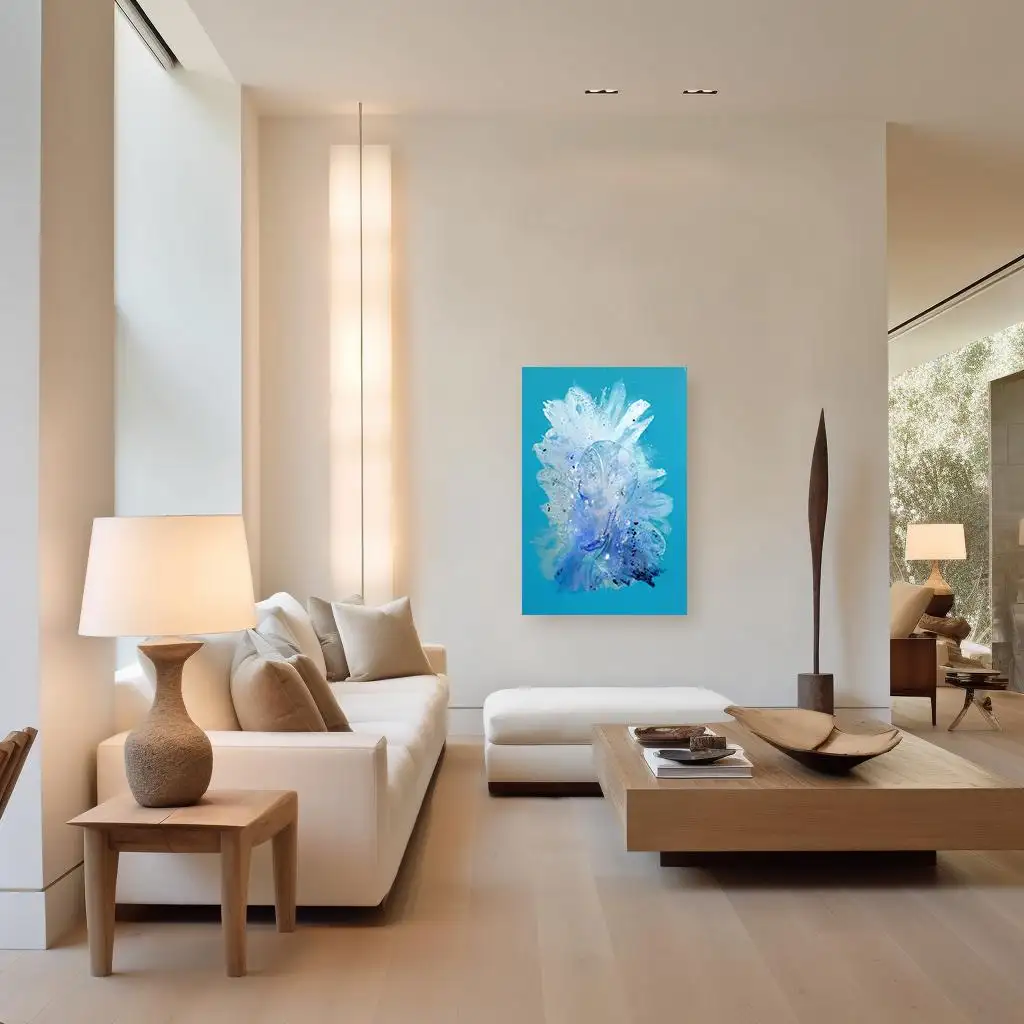
The Power of a Clear Space for Abstract Art
While many people imagine an artist’s studio as a place of chaotic energy and splattered paint, my creative process begins with a different approach. I call it the Ritual of Clearing. As a contemporary abstract artist in California, I have learned that my surroundings dictate my output; if my space is cluttered, my mind cannot function.
The Great Clearing
My path to minimalism was not a straight line. After working as a secretary for fifteen years, I decided to study psychology at USC. Although I loved learning about the human condition, I eventually felt like a number in a world of statistics. Ultimately, I realized I was trying to fit a vibrant soul into a tiny box. This led to a “meltdown” that became my first true ritual of clearing. By learning to say no to things that didn’t fit, I finally found my identity as “Clara Berta.”
My late husband saw the artist in me even when I couldn’t, and his permission to be creative again was the greatest gift I ever received.
The Integrity of the Wall
Instead of merely cleaning the surface, I chose to address the root of the problem. This meant cutting out the wet sections of the wall and removing the damp insulation—grueling work that was ultimately a necessity. You cannot maintain a focused mind if mold is growing behind your workspace. Once the air was clear, the mental heaviness lifted, allowing me to finally reclaim my inspiration.

Hole in the Wall, a creative project by female artist Clara Berta
Legacy: The Peter Max Influence
I am also an art collector. I remember the day I received a Peter Max painting. It was a gift from my husband. We met the artist in person. That moment changed a piece of art into a lifelong memory.
Today, that painting hangs in my studio. The vibrant colors change as the sun moves. This piece is the gold standard for my own work. When I paint, I chase that same energy. I want to create work that lasts for decades.
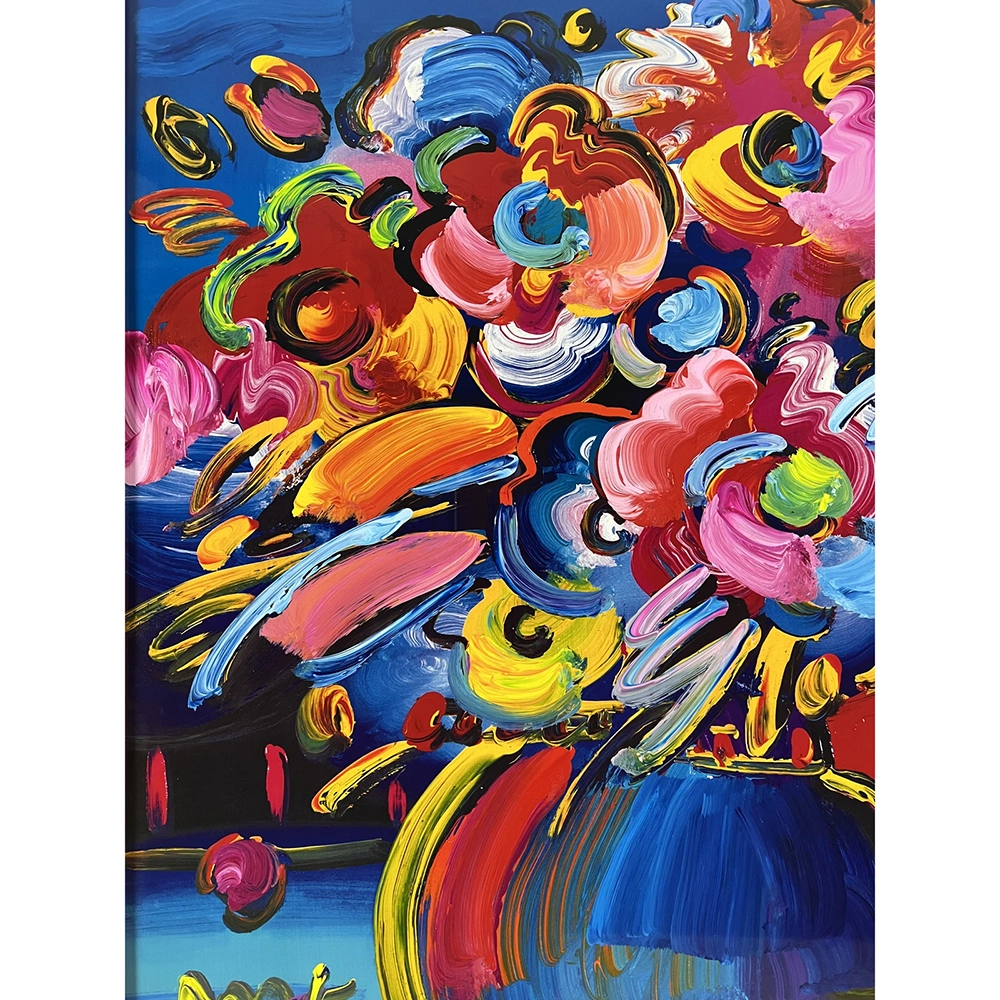
Peter Max’s floral still lifes are alive with bold, fauvist color, motion, and kinetic brushwork. A collector favorite, they showcase his spontaneous yet controlled expressionistic painting style, which emerged in the early 1960s.
“Kinetic Brushwork“: This is a term often used to describe Max’s spontaneous, high-energy strokes.
“Fauvist Palette“: Refers to the wild, non-traditional colors he uses for the flowers (like electric pinks and yellows against that dark blue).
“Atmospheric Tension“: A great phrase to describe how the bright flowers “pop” against the moody, grounding blue.
The Philosophy of the “Only One”
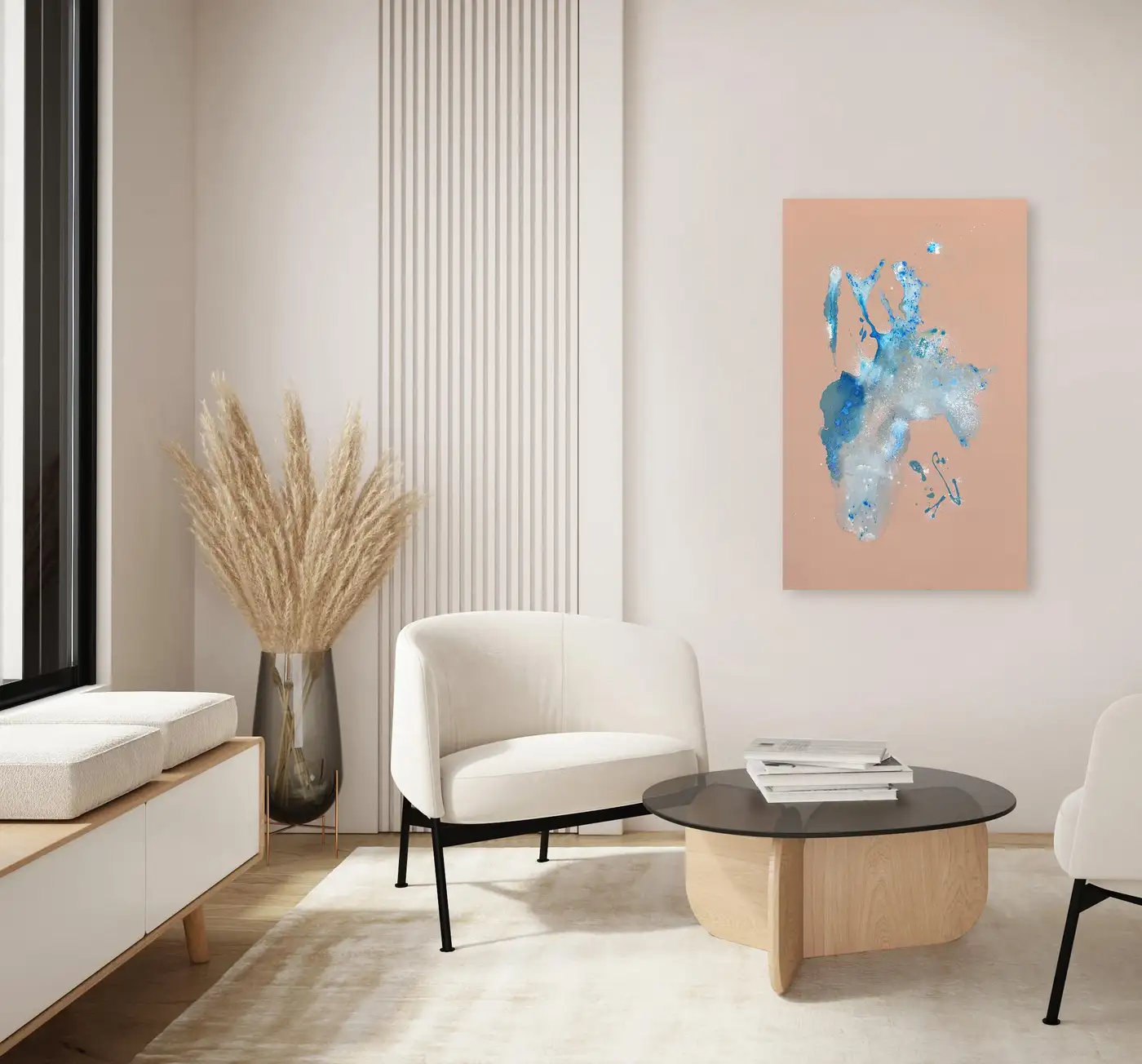
My decision not to sell prints stems from my minimalist values. I believe that mass-producing art often creates “stuff” for the sake of “stuff,” which contradicts the intentionality of my work. Because a print is just a reproduction, it can never fully capture the physical and emotional history found in an original, one-of-a-kind piece.

The Organized Artist
There is a myth that abstract art is accidental. However, real abstraction requires discipline. My need for order allows me to trust my process. Because my studio is clean, I am free to take risks. I do not worry about background noise. My organized mind finds freedom in a cleared space.
Conclusion: The Beauty of the Reset
The Ritual of Clearing proves we can always start over. Whether you leave a career or fix a wall, clearing is an act of hope. It shows that the future is worth the effort.
Soon, I will hang a new piece where the leaks used to be. It will sit on a dry, strong wall. This is the beauty of a minimalist space. It allows my heart to speak without interruption.

Frequently Asked Questions
1. Why is minimalism important to an abstract artist? Beyond just having a clean room, minimalism protects the “frequency” of the creative mind. By removing physical clutter first, an artist can then focus on pure intentionality, which allows the vibration of the paint to truly shine.
2. Why should I buy original abstract art instead of a print? Every original piece represents a singular milestone in an artist’s evolution. Because it carries the literal energy of its creation, it offers a depth that prints—which are mere reproductions—simply cannot match. Choosing original art means capturing the physical and emotional rituals of the studio.
3. Does the artist’s environment affect the quality of fine art? Absolutely. An organized environment acts as a “safety net” for creativity. For instance, when a studio is dry and tools are ready, the artist feels a sense of security. Consequently, they are free to take the bold risks that yield high-quality, professional art.
4. How does a background in psychology influence Clara Berta’s art?
Clara studied the depths of the human condition at USC. This background helps her translate complex emotions into art. For instance, she visualizes the need for a “reset” or serenity. She uses the language of color and texture to tell these stories.
5. What should a collector look for in one-of-a-kind fine art?
Collectors should look for the “vibration of the real.” Notice the depth of the layers and the texture of the brushwork. A piece born from a cleared space has a radiant quality. Because of this, reproductions can never truly imitate an original.
6. Where can I find original abstract art for sale in Laguna Beach?
You can view one-of-a-kind works at the Clara Berta Studio. We focus exclusively on original pieces. Therefore, every collector acquires a unique piece of contemporary abstract art from California.