
Have you ever scrolled through an endless feed of AI-generated art?
In just seconds, algorithms can spit out hyper-detailed landscapes and flawless abstract patterns. The lighting looks sharp, and the symmetry is perfect.
Yet, after staring at dozens of these digital images, a strange feeling sets in: emotional numbness.
The endless stream of digital perfection feels sterile. It looks like art, but it lacks a pulse. In the growing debate of human vs AI art, it makes you wonder why, in an era where technology can generate anything instantly, so much of it feels empty.
Key Takeaways
- An algorithm has no inner life to paint from, it can copy the appearance of feeling, but it has never lived any of it.
- The real soul of a painting often doesn’t show up until the third or fourth layer, physical history you simply can’t fake with pixels.
- Friction, the time, the mess, the patience, is the entire point of human art, not something AI’s instant output can shortcut around.
Jackson Pollock once offered the ultimate answer to this modern dilemma:
“Painting is self-discovery. Every good artist paints what he is.”
— Jackson Pollock, quoted in Selden Rodman’s Conversations with Artists (1957)
Pollock didn’t spill paint on canvas just to make pretty shapes. He poured his energy, his chaos, and his physical presence directly into the pigment.
That simple truth exposes why AI can never replace great human creators. An algorithm isn’t anyone. It has no inner life to paint from.
Abstract Art as a Mirror for Self-Discovery
I work with a paint pouring process. For me, creating isn’t about copying what I see with my eyes. It is about translating what is happening inside my mind and spirit into physical fluid movement.
Pollock’s words resonate deeply with my own journey. I feel my abstract artworks truly represent my energy and my way of viewing the world.
When I tilt a canvas and guide the stream of paint, I am not typing a prompt. I am stepping into a personal sanctuary where my internal state becomes reality.

Creating art has helped me to see more clearly what moves me and what excites me. At the same time, the process shows me what helps me to stay in a calm and peaceful state. On high-energy days, that means sharp, restless flows and rapid, bold contrast, releasing internal noise onto the canvas. On quiet days, it means gentle color blending and slow, deliberate pours that anchor inner stillness instead.
Through pouring, I learn things about my emotional landscape that I could never put into plain words. The canvas acts as a compass. It guides me toward what stirs my soul and grounds me when life feels overwhelming.
How could a computer code replicate an experience like that?
A machine does not know what it feels like to seek peace after a chaotic week. It cannot feel the quiet, electric buzz of sudden inspiration. An algorithm can copy the appearance of those feelings, but it has never lived them.
Human vs. AI Art: Building Layers and Honoring Energy
Right now, I am working to find my own voice.
Anyone who has tried to make something authentic knows how scary and exciting that quest is. Finding your unique artist voice isn’t just about picking a signature color palette or mastering a single technique. It is a deep process of self-discovery.
When I take a second look at the paintings that truly stand out, I realize something important: the magic happens when I am completely in the zone. For me, creating depth is where the magic is and also the soul of my work.
I used to be called the Queen of Texture, and I love that title because it speaks to the physical history built into every piece I make. The true soul of my canvas often doesn’t show up until the third or fourth layer:
- Layer 1, The Foundation: Raw emotion, a blank start.
- Layer 2, The Mess: Experimenting, learning, shifting.
- Layer 3, The Soul: Honoring energy, taking space.
- Layer 4, The Magic: Peak clarity, fully in the zone.
It takes time to create something magical with a deep story. Those early pours might get covered up, but they aren’t lost, they create subtle textures, unexpected color peaks, and a tactile richness beneath the surface that you simply can’t fake with pixels.
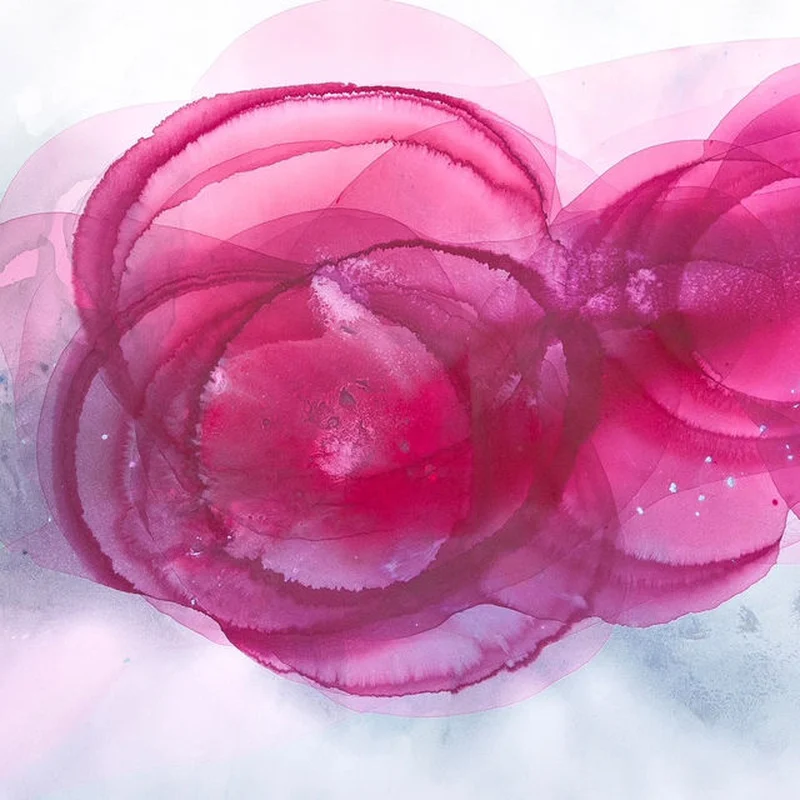
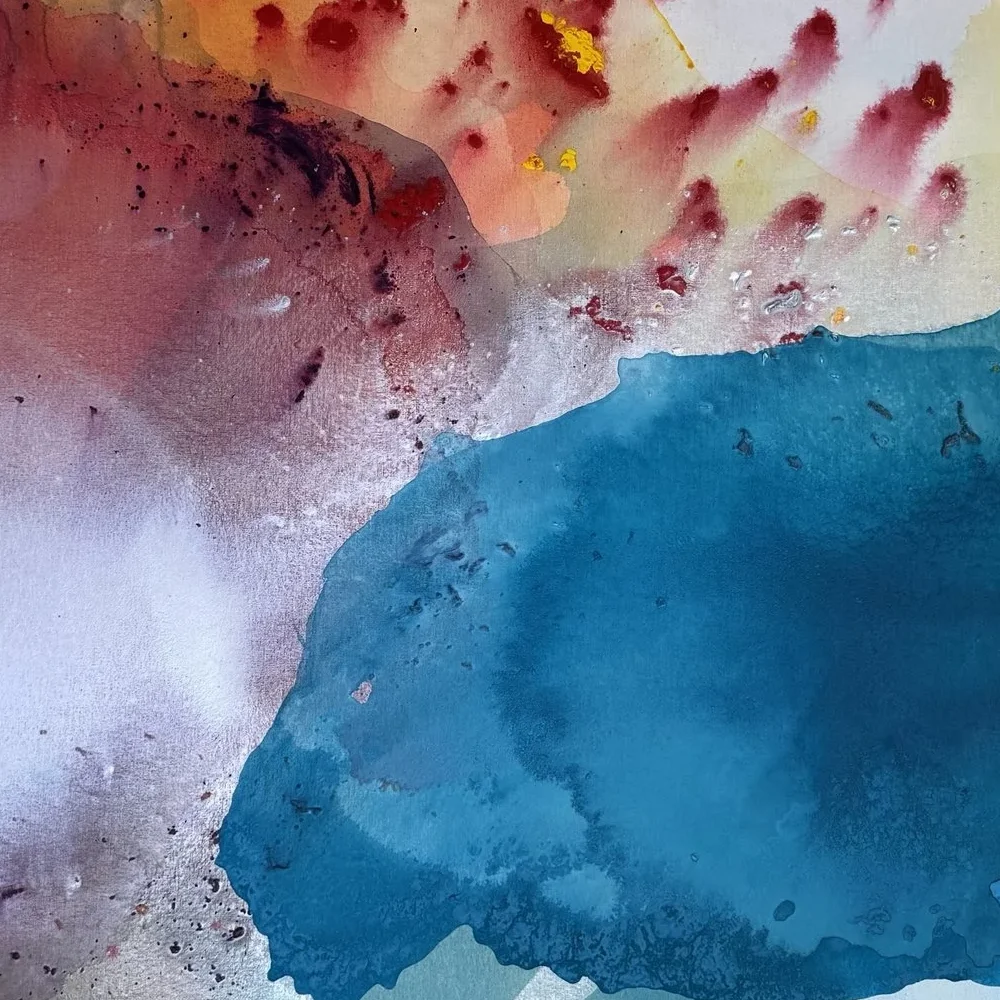
I think the canvas is reflecting what is happening in my life today. I am learning to say No when I get tired and take care of myself. Self-care is key for me as an artist and as a person, so it is about honoring my energy as well.
Just as I can’t rush my own wellbeing or force energy I don’t have, I can’t rush a great canvas. Building deep layers requires patience, rest, and listening to what my mind and body need.
Finding your voice requires embracing that whole, unvarnished process:
- Making a mess on purpose: Embracing chaotic, unpredictable pours because making a mess is often where the best learning happens.
- Painting over old work: Pouring right over past attempts, letting the ghost of the old layer add physical depth and texture to the new one.
- Honoring my limits: Stepping away when I am exhausted so I can pour from a place of genuine presence, not burnout.
- Catching the magic: Learning to recognize when I enter “the zone” and trusting the process when it takes over.
This journey is where the true magic of human art lives. When a painting stops you in your tracks, you aren’t just admiring technique. You are recognizing a human voice. You are feeling another person reach across time and space to say: “I felt this, do you feel it too?”
Why We Crave the Story Behind the Art
We do not cherish great art simply because it matches our living room furniture. We cherish it because of the story behind it, and the human who poured their life into it.
Consider these iconic examples of human context:
1. Vincent van Gogh
His swirling, intense night skies are breathtaking on a visual level. But they become unforgettable when you learn he painted them from the window of an asylum during a season of deep agony. The canvas becomes a physical witness to a human soul fighting for beauty in the dark.
2. Jackson Pollock
His massive drip paintings were once dismissed by critics as mere splatters. But when you realize his technique was an energetic, physical dance, a direct stream of consciousness poured onto the floor, the artwork comes alive.
| Human Art | AI Generation |
|---|---|
| Born from lived struggle | Born from web data |
| Built through deep layers | Flat, single-layer pixels |
| Driven by real energy | Mechanical calculation |
| Rich personal story | Zero backstory |
When an algorithm generates an image, there is no backstory. There was no late-night epiphany, no moment of entering “the zone,” and no layers of emotional history beneath the surface. It is a single surface layer, an echo without an origin.
Friction vs. Instant Gratification
Modern culture is obsessed with speed, efficiency, and shortcuts. Generative AI is the ultimate shortcut. It promises art without effort and expression without feeling.
However, in human creativity, the friction is the entire point.
The value of art lives inside the creative struggle: the time spent mixing paints, the courage it takes to say No and wait until your energy recovers, the boldness to pour over an old painting. That friction is where the human soul enters the canvas.
When comparing human vs AI art, removing human effort and personal story from the equation doesn’t yield better art, it just gives us digital noise.
When creation becomes effortless, it loses its emotional value. And when cheap content floods our feeds, we naturally begin to hunger for things that cost something to make, works that required real time, physical layers, and deep personal reflection.
The Future Belongs to Authentic Creators
The rapid rise of AI will not kill human creativity. Instead, it is setting off a quiet revolution in favor of authentic human expression.
As the internet becomes oversaturated with automated, algorithmically optimized content, the value of real human perspective will skyrocket. People will actively seek out the handmade, the textured, the deeply personal, and the honest. They will gravitate toward creators who are doing the brave work of honoring their energy, making space for self-care, and finding their own voice. This is exactly what interior designers and art consultants are already telling me directly; see how this plays out in hospitality and spa design.
AI can certainly be a helpful tool. It can organize data, handle administrative tasks, or spark a quick brainstorm. But it will never replace the human artist. It can never experience the magic of losing yourself in the flow of a pour or feeling truly at peace.
I will keep stepping up to my canvases. I will keep chasing the colors, fluid pours, and magic moments that reflect my personal energy. And I will keep building layer upon layer to tell my story.
At the end of the day, art isn’t about digital perfection. It is about being alive, AI can’t compare or create art that is personal and human.
Frequently Asked Questions
Why can’t AI truly replace human art?
Because an algorithm has no lived experience to draw from. It can copy the visual appearance of emotion, but it has never actually felt grief, joy, or the quiet buzz of inspiration, and that lived history is what gives a painting its weight.
What does “building layers” mean in fluid painting?
Each pour settles over the last, veiling early layers rather than erasing them. That buried history creates rich texture and unexpected peeks of color—a depth you can only earn by working through the process over time.
Option 2:
Where does the Jackson Pollock quote come from?
“Painting is self-discovery. Every good artist paints what he is” is quoted in Selden Rodman’s book Conversations with Artists (1957), which is based on his interviews with artists, Pollock among them.
Can I commission an original piece using this same process?
Yes. The commissions page explains how it works, or reach out to talk through a piece built around this same layered, intuitive pouring process.
Related Reading
- Queen of Texture: Modern Abstract Art
- Beyond Words: Why Painting Is My True Language
- How to Choose Abstract Art for Your Living Room
Want a Painting With a Real Story Behind It?
Browse the original paintings, or ask about a commission made in this layered, hand-poured process.
Browse the Gallery

